
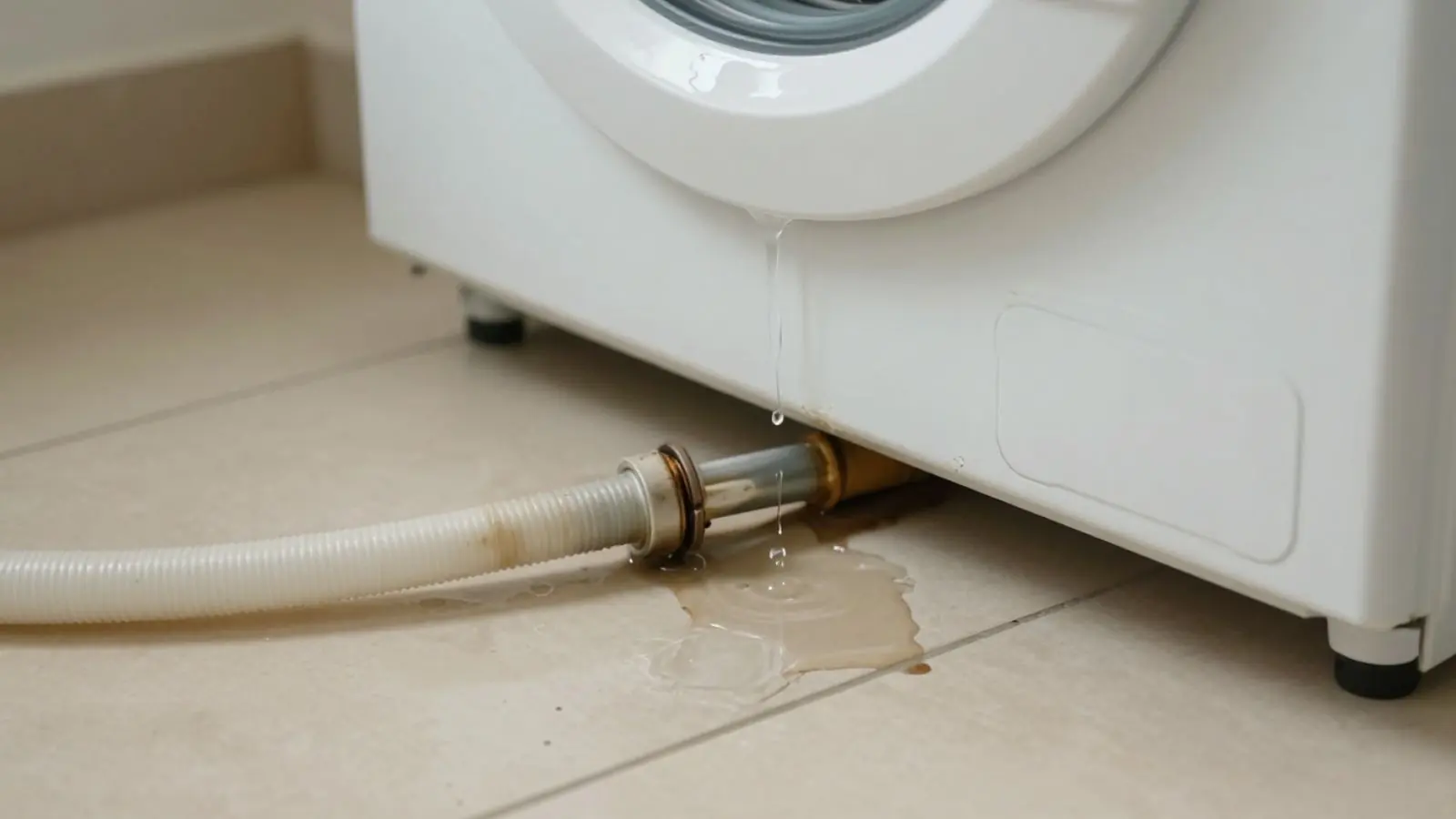
How appliance leaks happen and how far they spread
A modern home runs water to several machines. The washer has two supply hoses and a drain. A dishwasher adds a supply line, a drain hose and a door seal. The refrigerator feeds an ice maker through a thin plastic or braided line, and a leak at any of these points can run for hours.
DeSoto buys its drinking water from the City of Dallas, according to city water information, and that water is under steady pressure at every shutoff valve. Pressure is why a split hose can empty a bucket in minutes, and why a fitting that weeps all week can swell a cabinet base without anyone noticing.
Where the machine sits changes the damage. A washer in a hall closet next to carpet and a bedroom wall behaves differently than one on a garage slab. A dishwasher drips into a toe-kick and under cabinets, a refrigerator line into the floor and the wall behind it. For losses centered on the room itself, the kitchen water damage repair page covers cabinets and layered floors.
What you see and what it means
| What you see | What it usually means | What to do |
|---|---|---|
| Puddle at the front or back of a washer | Hose, drain or door seal failure | Close both supply valves and unplug if the cord is dry |
| Water at the base of a dishwasher | Supply line, drain hose or pump leak | Shut off the valve under the sink |
| Damp floor near a refrigerator | Ice maker or water line leak | Close the line valve and pull the unit forward carefully |
| Swollen toe-kick or cabinet base | Water has been wicking into particleboard | Photograph and call (972) 945-2885 |
| Musty odor after running the machine | Slow leak into the floor or wall | Call for a moisture check |
First-hour safety steps for an appliance leak
Close the valve
Shut the supply valve behind the machine. For a washer, close both the hot and the cold.
Mind the cord
Unplug the appliance only if the outlet and the floor around it are dry. Otherwise turn off the breaker.
Lift and protect
Move rugs, boxes and small items out of the wet area, and photograph them first.
Call for help
Call (972) 945-2885. If the supply line is damaged, call a plumber to replace it.
How crews clean up an appliance leak
Crews start by extracting any standing water. Then they pull the appliance forward and check behind and under it, since that is where water hides. A moisture meter and a thermal imaging camera show how far the water traveled under the flooring and into the wall.
Materials are sorted by what water did to them. Carpet and pad from a clean supply line may be dried in place if caught early. Laminate swells and is usually replaced. Particleboard cabinet bases that soaked up water often have to be replaced, while solid wood can dry. Baseboards come off so wall cavities can dry.
Air movers and dehumidifiers are set and monitored until readings meet the dry standard. The ANSI/IICRC S500 standard is the reference for this work, and the structural drying and dehumidification page explains how that is measured. Floors are covered on the hardwood floor water damage repair and carpet water damage cleanup pages.
Washer or dishwasher leaked?
Close the shutoff valve behind the machine and call. A dispatcher answers at any hour.
What changes the cost of appliance leak cleanup
- How long it leaked. A hose caught in minutes soaks one room, while a slow drip can ruin the floor and wall
- Floor type. Tile, hardwood, laminate and carpet each take different handling
- Cabinet bases. Particleboard often needs replacement, solid wood may dry
- Wall cavities. Water inside walls adds drywall and insulation work
- Water category. A supply line leak is clean at first, while a washer drain or dishwasher leak is not
- Drying time. Bigger areas and thicker materials need more equipment days
Insurance and appliance leaks
The state insurance regulator, the Texas Department of Insurance, calls a sudden and accidental release of water a common covered risk, with continuous leaks typically left out. A hose that bursts is the sudden kind. A line that has been weeping for months is treated differently, and the policy may not cover the appliance itself.
Photograph the machine, the failed part and the wet floor before moving anything. Keep the failed hose for the adjuster. The Texas Department of Insurance tells policyholders to limit repairs to temporary ones until the insurer has inspected.
Mistakes to avoid with an appliance leak
- Running the machine again. A cracked hose can fail again in a single cycle
- Mopping up and moving on. Water under the floor and in the toe-kick stays wet
- Leaving rubber hoses in place. Braided hoses are less likely to fail, and shutting valves on long trips adds a layer of protection
- Tossing the failed part. The adjuster may want to see it
- Painting over the stain. Wet drywall and trim still hold water
Where we respond for appliance leaks
Crews work across DeSoto, including neighborhoods along Hampton Road and Belt Line Road, and reach Cedar Hill and Red Oak for active leaks. A leak from the tank heater is on water heater leak cleanup, and standing water on emergency water removal.
Is emergency appliance leak water damage cleanup available in DeSoto?
Yes, although most appliance leaks are not true emergencies until the water spreads. If it has, call (972) 945-2885 at any hour and a crew is sent based on availability.
Close the shutoff valve first, then call a plumber for the failed line.
How can I tell if my washer is leaking inside the wall?
Check for a damp smell, bubbling paint or a soft baseboard near the machine. Look at the supply valves and for rust or white crust.
A moisture meter finds water you cannot see.
Can a leaking dishwasher damage the cabinets?
Yes. Water runs along the floor under the cabinets and soaks the toe-kick and base. Particleboard swells and does not recover.
Solid wood can often dry.
Will insurance pay for an appliance leak?
Often for the resulting water damage when the failure was sudden. A slow leak is typically treated differently, and the appliance itself may not be covered.
Photograph the damage and read your policy.
Can I run the appliance again after the leak is fixed?
Not until the failed part has been replaced and the area is dry. A repaired line can still be weak.
A plumber or appliance technician can confirm the repair.