
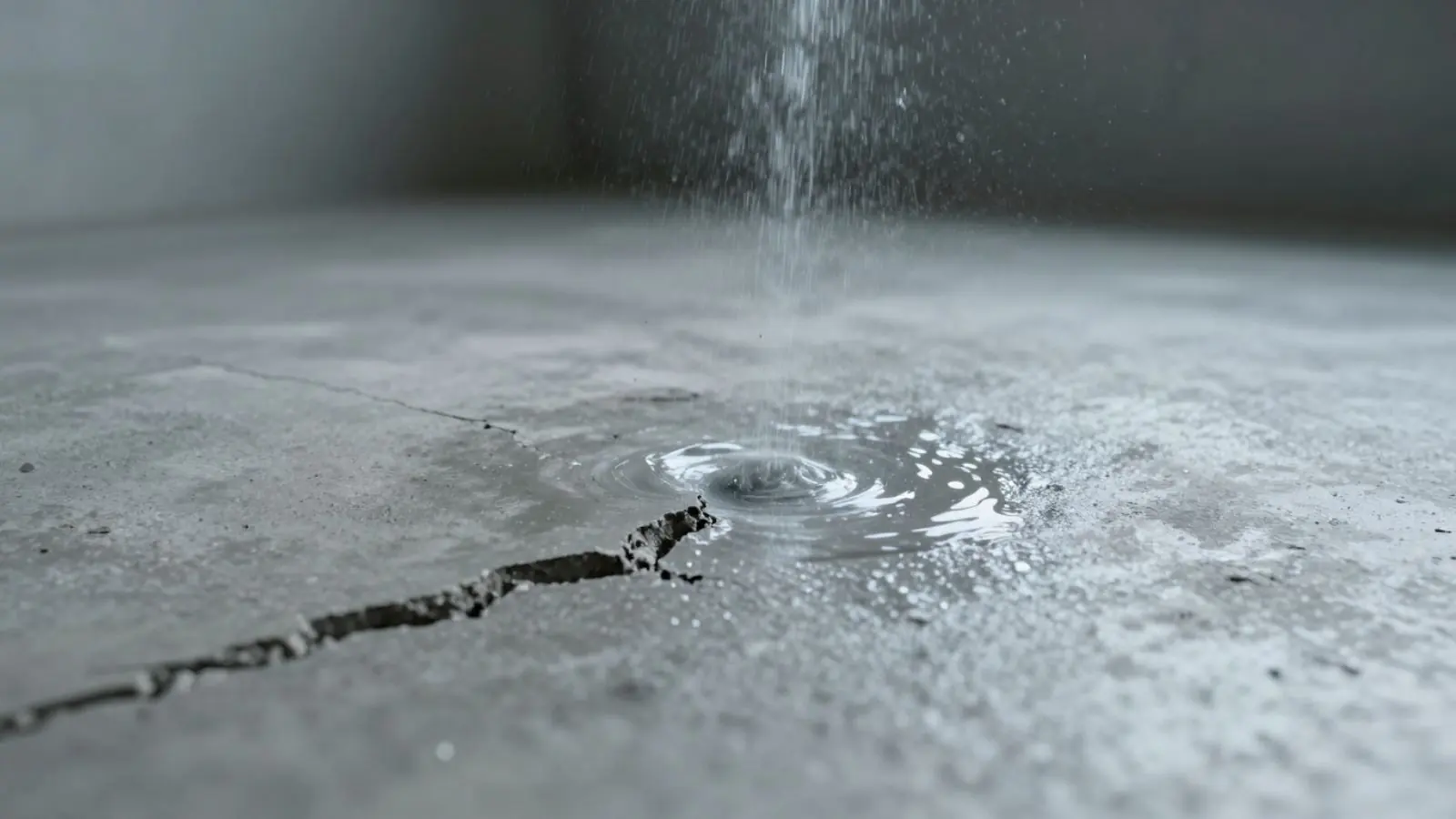
What a slab leak is and why it happens in North Texas
A slab leak is a leak in a water line that runs under or inside a concrete foundation. Many North Texas homes sit on slabs, so supply and drain lines run through or beneath the concrete. When one of them fails, the water has nowhere to go but up through the slab or sideways along it.
Regional extension-based guidance describes the clay soil of the Blackland Prairie around Dallas and Fort Worth as swelling when wet and shrinking in dry spells. Soil movement under a slab can stress lines and joints, and that is one reason foundation work and plumbing leaks are often discussed together. Age, corrosion and pressure are other causes.
DeSoto buys its drinking water from the City of Dallas, according to city water information, and the supply arrives at steady pressure. A pinhole in a line under the slab can leak for weeks before it shows, so a high water bill is often the first sign. Locating and repairing the line is plumbing work. Water damage cleanup is what we do.
What you see and what it means
| What you see | What it usually means | What to do |
|---|---|---|
| A warm or hot spot on the floor | A hot water line leaking under the slab | Close the water heater supply and call a plumber |
| Sound of running water with all fixtures off | A hidden pressurized leak | Check the meter and call both a plumber and (972) 945-2885 |
| A sudden jump in the water bill | A leak that has run for days or weeks | Check the meter with all fixtures off |
| Damp carpet or floors that buckle | Water rising through the slab | Close the main valve and photograph the area |
| Cracks in grout or wet baseboards | Moisture moving through the slab | Call for a moisture check |
Not every wet floor is a slab leak. Appliance leaks, plumbing in walls and roof or AC leaks look similar, so a plumber confirms the source with leak detection before anyone breaks the concrete. The appliance leak water damage page covers the common look-alikes.
First-hour safety steps for a slab leak
Close the main
Shut the main valve at the street side or the house. If the floor is wet, the leak is active.
Hot floors
A hot spot on the slab can be a hot water line leak. Keep pets and children off the area and do not stand on it with bare feet.
Electrical caution
Keep the power off in rooms where water is rising, and turn it off at a dry panel if needed.
Call both
Call a plumber to find the leak and call (972) 945-2885 to remove the water and dry the structure.
How crews handle slab leak water damage
The first step is extraction. Water that rises through a slab spreads under flooring, along baseboards and into the bottom of walls. Crews remove standing water and lift carpet or pad where needed. Moisture meters and a thermal imaging camera map how far the water traveled.
Slab leaks have a special drying problem. Concrete holds water, and the floor above it can seem dry while the slab stays wet for days. Crews use dehumidifiers and air movers, and sometimes floor drying mats, and keep checking readings until the concrete and the surfaces on top meet the dry standard under ANSI/IICRC S500.
Wood floors, laminate and carpet over a wet slab are usually the first to fail. Whether they come up depends on how fast the water was found. The hardwood floor water damage repair and carpet water damage cleanup pages explain how those materials respond.
Water coming up through the floor?
Close the main valve and call. A dispatcher answers around the clock and explains how drying works.
What changes the cost of slab leak cleanup
- How long it leaked. A short leak soaks one room, while a long one reaches several
- Flooring type. Tile is often dried in place, wood and carpet are more likely to be replaced
- Wall cavities. Water wicking up into walls adds drywall and insulation work
- Concrete drying. A wet slab can take days to reach a safe moisture level
- Plumbing repair. Leak detection and repair are separate plumbing costs
- Mold risk. Damp floors that sat for weeks may need mold work
Insurance and slab leaks
On water losses, the Texas Department of Insurance explains that sudden and accidental releases are a common covered risk while continuous leaks are typically not. Many policies also treat damage to the foundation itself differently from damage caused by water that escaped. Read yours carefully and ask your insurer what applies to slab leaks.
Photograph the wet areas and keep records of the plumber's leak detection. The City of Duncanville lists foundation repairs among work that generally needs a permit, and DeSoto Building Inspections at 972-230-9610 can tell you what applies in DeSoto when a plumber tunnels or breaks the slab.
Mistakes to avoid with a slab leak
- Ignoring a high water bill. It is often the first sign
- Covering a wet floor with new flooring. Moisture gets trapped
- Assuming it is a roof or AC leak. Check the meter first
- Delaying the call. Slab leaks do not fix themselves and the water keeps soaking the structure
- Skipping drying after the repair. Water left behind causes mold
Where we respond for slab leaks
Crews cover DeSoto and nearby towns including Cedar Hill and Lancaster. For the drying equipment used, see structural drying and dehumidification, and for a line that splits in a wall, see burst pipe water damage cleanup.
Is emergency slab leak water damage cleanup available in DeSoto?
Yes. If water is rising through the floor, call (972) 945-2885 at any hour. A crew is sent based on availability to extract the water while your plumber works on the line.
A plumber finds and repairs the leak. We handle the water and the drying.
How do I know if I have a slab leak?
Warm spots on the floor, the sound of running water, a high water bill or damp flooring are common signs. A plumber confirms with leak detection.
Check the meter with every fixture off.
Do you repair the pipe under the slab?
No. Locating and repairing the line is plumbing work. We remove the water and dry the structure afterward.
Many homeowners schedule both on the same day.
Does insurance cover a slab leak?
The water damage is sometimes covered when the leak was sudden and accidental. Foundation damage and continuous leaks are often treated differently.
Read your policy and ask your insurer.
How long does a slab take to dry?
It depends on how much water soaked it. Concrete holds moisture longer than wood, so readings decide, not the calendar.
Crews log readings until the dry standard is met.