
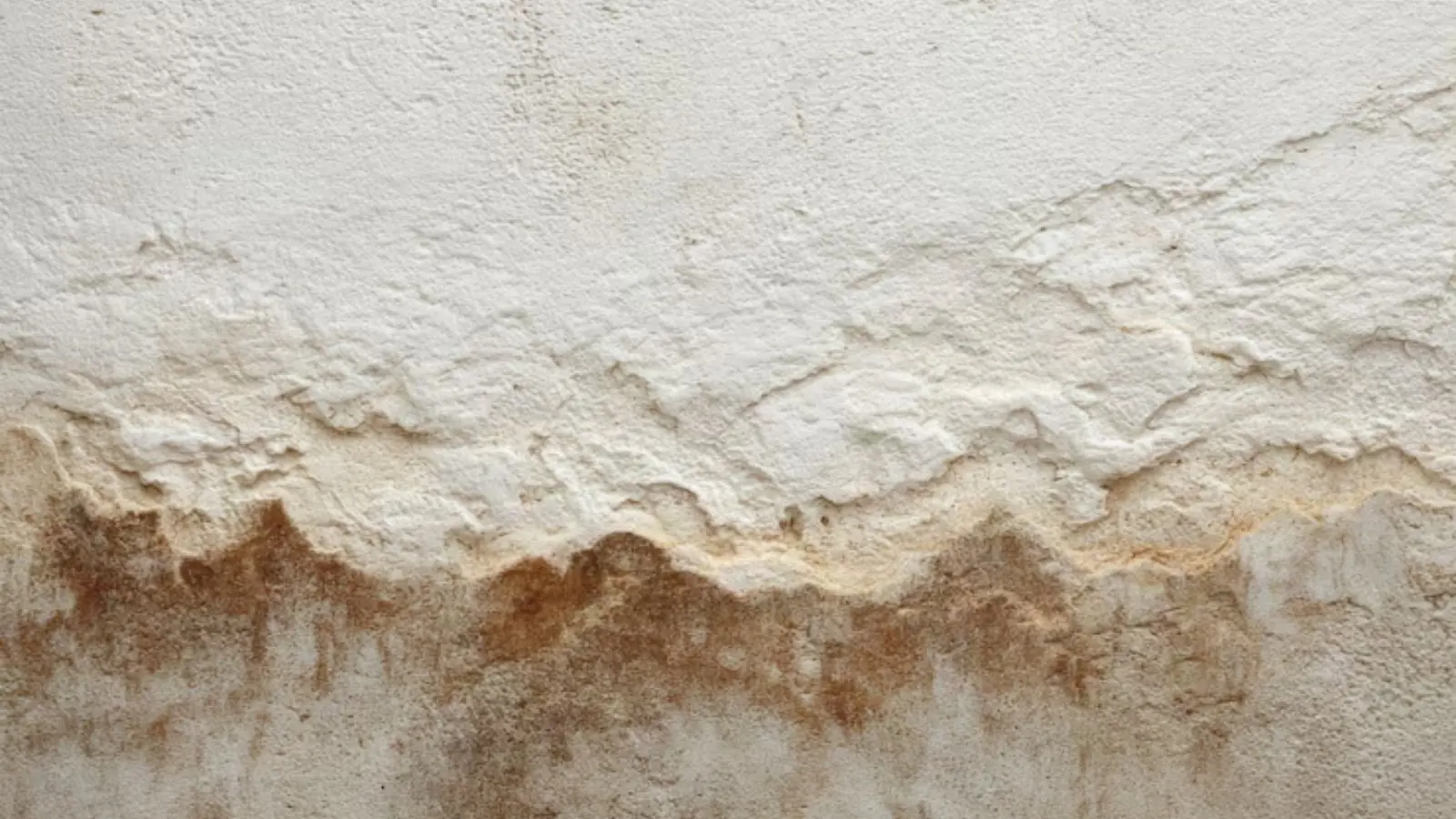
What water does inside a wall
A wall is a stack of layers. Paint covers drywall, drywall hides studs and insulation, and the bottom plate sits on the floor. Water enters from a leaking pipe in the cavity, from a roof leak above, from a floor flood that wicks up, or from wind-driven rain on an exterior wall.
Drywall is gypsum between paper. When it gets wet, the paper holds water and the gypsum softens. It stains, bubbles, loses strength and, if it stays wet, grows mold on the paper. Insulation behind it holds water against the studs and the bottom plate, which keeps the wall wet from the inside.
Water travels. A flood on a floor wicks upward, and a leak in an upper wall runs down inside the cavity. This page covers walls, and ceilings are handled in their own guides. The roof leak water damage page explains leaks that start above.
What you see and what it means
| What you see | What it usually means | What to do |
|---|---|---|
| Brown stain with a ring | Water from above or inside the wall | Mark the edge with a pencil and the date |
| Bubbling or peeling paint | Moisture behind the paint | Do not scrape or paint |
| Soft or crumbly drywall | Gypsum has absorbed water | Keep off the wall and call (972) 945-2885 |
| Baseboard lifting or swollen | Water along the base | Photograph and have the wall checked |
| Musty odor or dark spots | Mold on the paper face | Mold rules apply, see the Texas rule below |
First-hour safety steps for a wet wall
Stop the water
Close the valve or stop the source. A wall cannot dry while it is still taking on water.
Mind the wiring
Outlets in a wet wall can be live. Turn off the breaker for the area before touching anything.
Do not poke
A sagging wall or ceiling section can fall. Keep clear and place a bucket.
Call for help
Call (972) 945-2885. Document the stain before it changes.
How crews dry and repair walls
Crews check the wall with a moisture meter and a thermal imaging camera. These show how high the water has traveled and whether the cavity is wet. If the wall is wet and the drywall is still firm, the cavity may be dried through small holes with air movers or an injection system.
If the drywall is soft, sagging or has been wet for days, it is cut out. A flood cut removes the bottom part, usually a foot or two above the water line, so the cavity can be inspected. Wet insulation is removed, and studs are dried until they meet the dry standard under ANSI/IICRC S500.
Then the repair begins. New drywall is hung, taped and finished, primed with a stain-blocking primer and painted to match. The water damage repair page covers the rebuild step, and drying methods are on structural drying and dehumidification.
Wall wet, stained or sagging?
Stop the source and keep clear of the wall, then call. A dispatcher explains how wall checks work.
What changes the cost of wall water damage repair
- Height of the wet area. A flood cut of one foot differs from a full wall
- Insulation type. Batt insulation is replaced, while foam is harder to dry
- Texture and paint. Matching texture takes time
- Number of walls. Water often reaches adjoining walls
- Mold. Growth adds a separate scope
- Trim and baseboard. Removal and reinstalling is a separate step
Permits, mold and insurance
DeSoto Building Inspections says a permit is required to alter or repair a building, and the city asks you to call 972-230-9610 before you close walls over replaced plumbing or electrical work. Ask before the drywall goes back up.
Under Texas Department of Licensing and Regulation rules, visible mold covering under 25 contiguous square feet can be cleaned by unlicensed people, with exemptions. Larger areas need licensed professionals. The Texas Department of Insurance says a sudden and accidental release of water is a common covered risk, and that mold removal is generally excluded except to repair damage from a covered risk.
Mistakes to avoid with wet walls
- Painting over the stain. It bleeds through and the wet drywall remains
- Closing a flood cut too soon. Damp studs invite mold
- Skipping the stain blocker. The ring returns
- Using caulk on a wet wall. It seals water in
- Ignoring the cause. The wall will fail again
Where we respond for wall damage
Crews cover DeSoto and reach Duncanville and Cedar Hill. If the wall was wet by a line inside it, see burst pipe water damage cleanup, and if mold is present, see mold remediation.
Is emergency wall water damage repair available in DeSoto?
Yes, when a wall is actively wet or sagging. Call (972) 945-2885 at any hour and a dispatcher sends a crew based on availability.
Stop the source first, then call.
Can wet drywall be dried instead of replaced?
Sometimes, if it is firm, was wet briefly and the cavity can be dried.
Soft or long-wet drywall is replaced.
What is a flood cut?
A flood cut removes the lower part of a wall, usually a foot or two above the water line, so the cavity can be inspected and dried.
It is patched afterward.
Will paint cover the stain?
Not by itself. A stain-blocking primer goes first.
Paint over a wet wall will fail.
Does insurance cover wall damage?
Usually when one sudden event is behind it. A leak that ran for months may fall under other terms.
Read your policy and photograph the wall.