
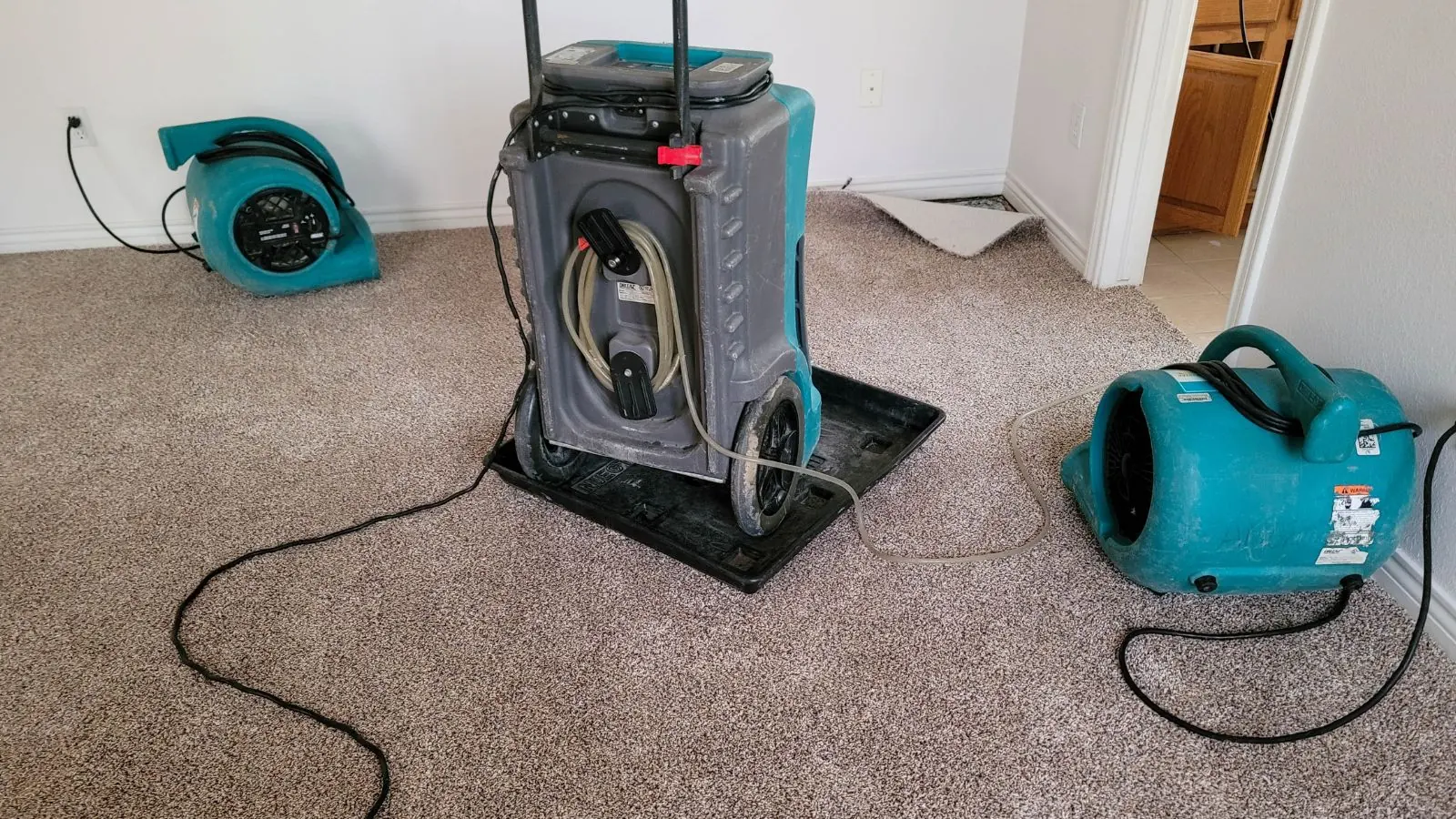
What structural drying is and why it takes days
Structural drying is the controlled removal of moisture from building materials. It is different from cleaning up water. Once standing water is gone, moisture stays inside wood, drywall, insulation and concrete, and it keeps moving until it is measured and pulled out.
The water mitigation page explains the full first 72 hours. This page covers the drying itself, which is the part that makes the difference between a wall that looks dry and one that is dry. Materials dry at different rates, so a single dry reading in one spot does not mean the house is done.
Local conditions matter. The National Weather Service in Fort Worth describes summer highs consistently in the 90s, often 100 or more, so the outdoor air is often warm and humid after storms, and that is why dehumidification is part of the plan and not just airflow. Texas homes also run air conditioning, which helps, but only when ducts are not wet.
What you see and what it means
| What you see | What it usually means | What to do |
|---|---|---|
| Musty smell days after the water was gone | Moisture trapped in materials | Call for a moisture check |
| Cupped or buckled floors | Wood absorbing moisture from below | Do not sand or seal until dry |
| Baseboards that stay cool and damp | Wet wall cavity | Do not paint over it |
| Window condensation after a leak | High indoor humidity | Run a dehumidifier and call (972) 945-2885 |
| Paint bubbling weeks after a leak | Moisture still moving through drywall | Check readings before repainting |
First-hour safety steps before drying begins
Stop the source
Water must be off before drying can work. Close the valve or fix the leak first.
Mind the power
Do not run extension cords through standing water, and keep the power off in wet rooms.
Keep air moving
Open interior doors, not exterior ones, so air can circulate. Do not heat a wet room.
Call for readings
Call (972) 945-2885 to arrange a moisture check before covering or painting anything.
How crews dry a structure
The process starts with a map. A moisture meter and a thermal imaging camera locate wet materials, and the crew records readings. A dry standard is set by measuring the same material in an unaffected area of the house. That number is the target for each material.
Air movers push dry air across wet surfaces, and dehumidifiers remove the moisture from the air. Low grain refrigerant dehumidifiers work well in normal conditions, and desiccant units are used in colder or very wet conditions. Wall cavities can be dried through small holes or removed baseboards, and floors can be dried with mats or injection systems.
Readings are taken on each visit and recorded in a drying log. Equipment is adjusted, and when a material is not drying, it is opened or removed. The ANSI/IICRC S500 standard is the reference for the method. When the log shows all targets met, equipment is removed.
Wondering if it is really dry?
Describe what got wet and for how long. A dispatcher explains how readings and monitoring visits work.
Classes and categories that guide the plan
| Factor | What it describes | Effect on drying |
|---|---|---|
| Category 1 | Water from a clean source | Drying can start right away |
| Category 2 | Water with some contamination | Porous materials are often removed |
| Category 3 | Heavily contaminated water | Removal and cleaning come first |
| Class 1 and 2 | Small to room-sized, less absorbent materials | Fewer machines |
| Class 3 and 4 | Water from above or deeply held in dense materials | Specialty drying and longer times |
Clean water can degrade after a day or two in materials. DeSoto buys its drinking water from the City of Dallas, according to city water information, so a supply line leak usually starts as category 1, and fast drying keeps it that way.
What changes the cost of structural drying
- Affected area. More square footage needs more machines
- Materials. Dense materials such as hardwood, concrete and plaster dry slowly
- Time before drying started. A longer wait means deeper moisture
- Number of visits. Monitoring continues until targets are met
- Access. Closed wall cavities and finished basements need special methods
- Equipment days. Each day of equipment adds to the scope
Insurance and drying records
The Texas Department of Insurance advises policyholders to photograph damage and make only temporary repairs until the insurer has seen it. A drying log helps the claim because it shows what was wet, what was done and when the structure reached a dry standard.
DeSoto Building Inspections says a permit is required to alter or repair a building, so ask the city at 972-230-9610 whether your rebuild needs one, and have the drying records ready before walls close.
Mistakes to avoid when drying a house
- Running one fan and calling it done. Moisture in cavities needs air and dehumidification
- Turning up the heat. Warm, humid air moves moisture instead of removing it
- Painting too soon. Paint traps moisture in drywall
- Closing walls over damp framing. This is how mold starts
- Ignoring a musty smell. It means moisture remains
Where we dry structures
Crews dry homes across DeSoto and reach Duncanville and Red Oak. If growth has started, see mold remediation. If the standing water is still there, see emergency water removal.
Is emergency structural drying available in DeSoto?
Yes, although drying is usually planned after the water is out. Call (972) 945-2885 at any hour and a dispatcher explains how a monitoring visit is arranged.
Starting soon after the water stops makes drying faster.
How long does structural drying take?
It depends on the materials, the area and the starting moisture. Many jobs take several days, and dense materials take longer.
Readings decide when it is done, not the calendar.
Are fans enough to dry a house?
Fans move air but do not remove moisture from it. A dehumidifier pulls it out of the air so the materials can release more.
Both are needed in most losses.
Why do crews come back each day?
They take readings and adjust the equipment. If a wall is not dropping, the setup changes or the wall is opened.
The log records progress.
Will my power bill go up?
Drying equipment uses electricity, and the amount depends on how many machines run and how long.
Ask your insurer whether they cover the extra use.