
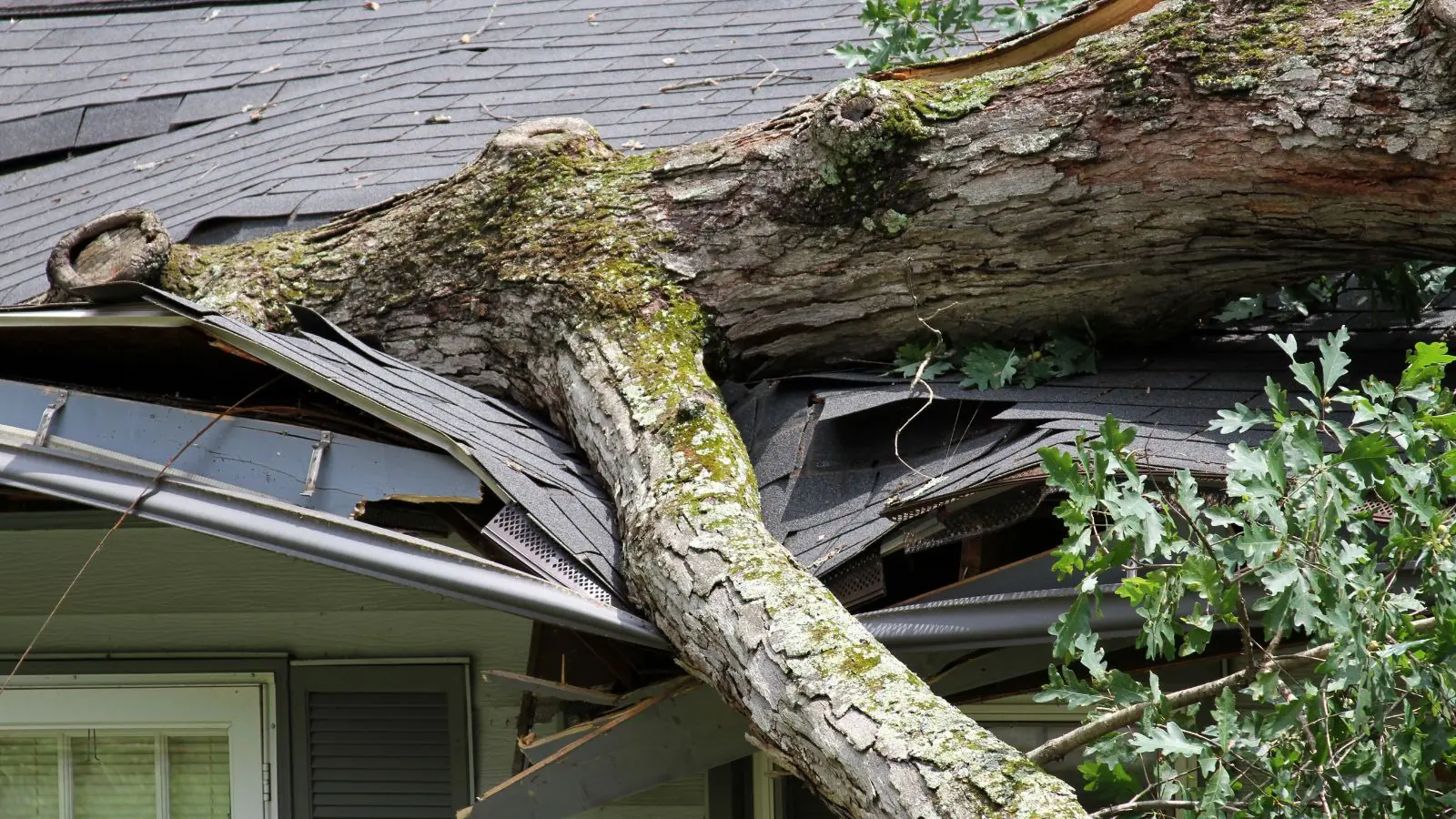
How storms let water into DeSoto homes
Storm damage is about openings. Hail cracks or bruises shingles. Wind lifts them and strips flashing. A limb or a whole tree can punch through a roof and ceiling. Wind-driven rain pushes through windows, doors and siding where a gentle rain would never reach. Each opening lets water in.
The National Weather Service in Fort Worth says thunderstorms and severe weather peak in spring and that large hail occurs nearly every year in the Metroplex. Storm seasons here are not rare events. Local drainage matters too. News reports from August 2022, citing the city, put at least 19 DeSoto homes with water inside after a torrential rain overwhelmed drainage.
This page is for storm losses with wind, hail, debris and wind-driven rain. Rising ground water and creek flooding are handled on the flood damage restoration page, and a slow leak from a roof that predates the storm is on roof leak water damage.
What you see and what it means
| What you see | What it usually means | What to do |
|---|---|---|
| Water coming through a ceiling after hail | Roof opened by impact | Place buckets and keep clear of the ceiling |
| Tree on the roof or through a wall | Structural and water damage | Stay out of the area and call 911 if unsafe, then (972) 945-2885 |
| Wet carpet along an exterior wall | Wind-driven rain through a window or door | Lift small items and call |
| Power out with water inside | Storm damage to lines | Do not enter wet areas with live wiring |
| Soaked insulation visible in the attic | Roof or vent opening | Keep out of the attic and call |
First-hour safety steps after a storm
Check for danger
Stay away from downed power lines, hanging limbs and damaged ceilings. Call 911 for injuries or fires.
Electrical caution
If water is near the panel, fixtures or outlets, leave the power alone unless you can reach the panel on dry ground.
Contain the water
Place buckets, move furniture and lay towels. Photograph everything first.
Call for help
Call (972) 945-2885. If the roof is open, a roofing contractor can tarp it and we handle the water inside.
How crews handle storm water damage
The crew checks safety first, then extracts any standing water. Wet carpet, insulation and soft ceiling drywall are removed where they cannot be dried. Moisture meters and a thermal imaging camera map wet materials, including those that look fine on the surface.
Roof openings need temporary protection before drying can work. Many callers arrange a tarp from a roofing contractor first. Then air movers and dehumidifiers dry the rooms below and, when needed, the attic. Readings are logged until materials meet the dry standard, in line with the ANSI/IICRC S500 reference.
After a big storm many homes are affected at once, so crews are in demand and the schedule changes. Call early and describe what you see. The structural drying and dehumidification page explains the process. Rebuilding is covered on water damage repair.
Storm damage and water inside?
Keep clear of damaged areas and call. A dispatcher is on the line through the night after a storm.
What changes the cost of storm water cleanup
- How much water came in. A small opening wets a room, while a big one wets several
- How long before drying. Rain that sat for a day soaks deeper
- Roof and ceiling type. Smooth, textured and acoustic ceilings dry and repair differently
- Debris. Fallen limbs and broken materials add cleanup
- Attic insulation. Wet insulation is removed and replaced
- Mold risk. Slow-drying materials may need extra attention
Insurance and storm damage
The Texas Department of Insurance says a sudden and accidental release of water is a common covered risk and that most home policies do not cover damage caused by floods. Wind and hail damage that opens a roof is usually handled under the homeowner policy. Rising water from outside is flood, which needs separate coverage with its own waiting period of 30 days.
Photograph the roof, the openings and the wet rooms before anything is moved. Texas Department of Insurance guidance is to keep early repairs temporary and to let the insurer see the damage first. The FEMA Flood Map Service Center shows your flood zone, and DeSoto Building Inspections at 972-230-9610 can tell you what permits apply.
Mistakes to avoid after a storm
- Climbing on a wet roof. Slick shingles and hidden damage cause falls
- Waiting for the insurer before tarping. Reasonable temporary protection is expected
- Walking into rooms with live wiring. Water and power are a hazard
- Throwing away damaged items. Keep them for the adjuster
- Signing with the first roofer who knocks. Take time to compare
Where we respond after storms
Crews work across DeSoto and reach Lancaster and Cedar Hill. For standing water, see emergency water removal, and for drain backups after heavy rain, see sewage backup cleanup.
Is emergency storm water damage cleanup available in DeSoto?
Yes. After a severe storm the line is open at all hours. Call (972) 945-2885 early, because many homes are affected at the same time and the schedule fills quickly.
After major storms, call early since many homes are affected at once.
Should the roof be fixed before cleanup?
The opening should be covered or tarped first so more rain does not enter. Then the wet materials can be removed and dried.
A roofing contractor handles the roof, and we handle the water inside.
Is storm water damage covered by insurance?
Wind and hail damage that lets rain in is often covered under a home policy. Flood is typically not.
Take photographs, check your policy and call your insurer.
What if the power is out?
Crews can bring generators for equipment in many cases, but safety comes first with live wiring.
Tell the dispatcher about the power situation.
How is this different from flood damage?
Storm damage here means water through openings in the roof and walls. Flood means water rising from the ground or from a creek.
Flood water is treated as contaminated and handled differently.