
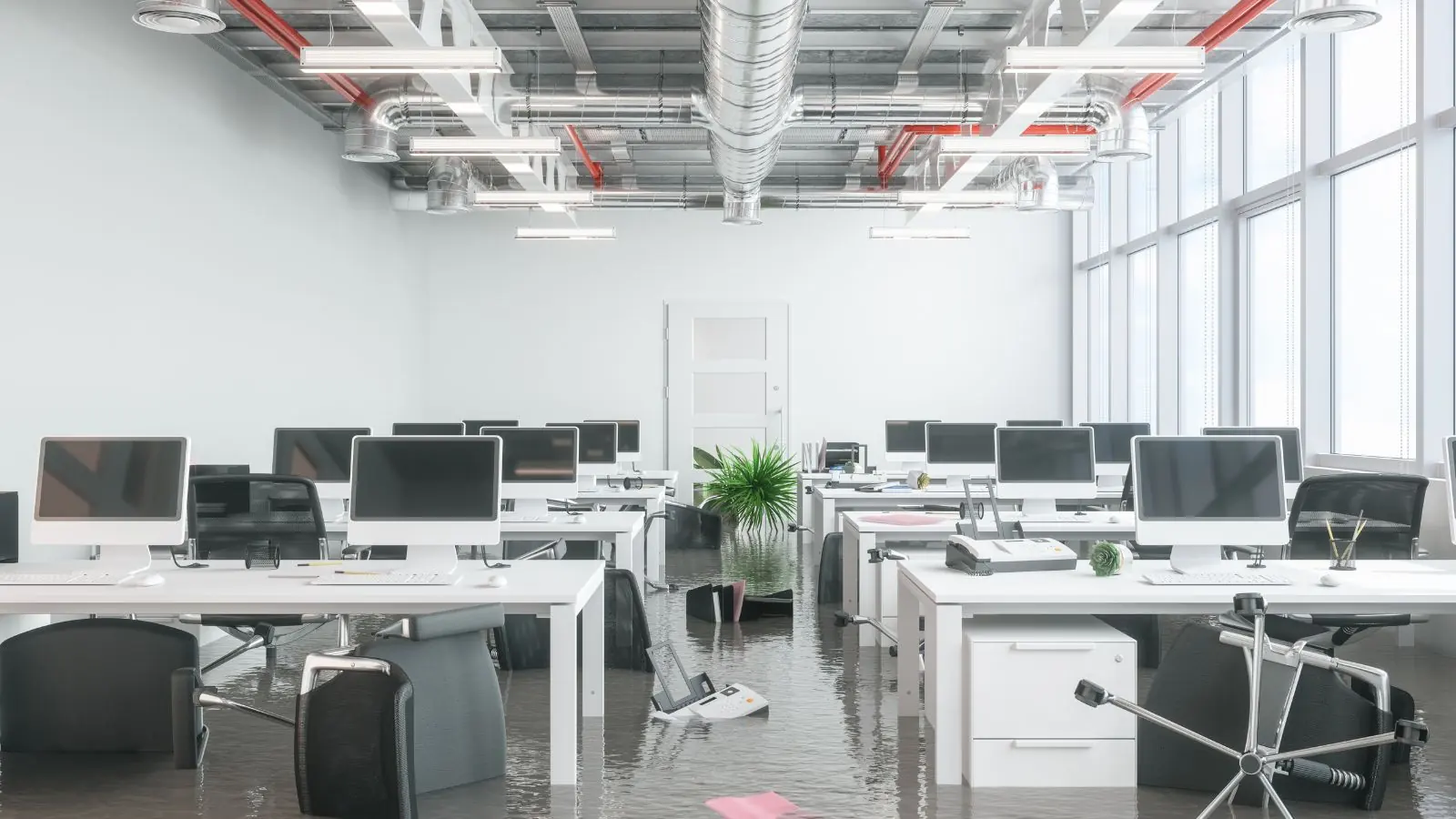
What we can do for a commercial water loss
Water behaves the same way in a shop or an office as it does in a house. It follows floors, soaks walls and ceilings, and keeps moving into materials. Our crews remove standing water, find wet materials with moisture meters and thermal imaging, and dry the structure with air movers and dehumidifiers.
We handle extraction, drying, cleanup of wet materials and moisture monitoring. We can also document wet areas with photographs and drying logs. We do not manage your business, move your inventory, repair your equipment or replace systems. Rebuilding work, such as ceilings, walls and floors, is a separate step after the structure is dry.
Every building is different, and size and layout decide how the work goes. A large open floor with a slab dries differently from a suite with several interior walls and a drop ceiling. The dispatcher asks about the space and what failed, so the crew arrives with the right kind of equipment.
What you see and what it means
| What you see | What it usually means | What to do |
|---|---|---|
| Water on the floor from a supply or drain line | Active plumbing failure | Close the nearest shutoff and call (972) 945-2885 |
| Ceiling tiles stained or dropping | Water above the ceiling plane | Keep people clear and place buckets |
| Wet carpet or tile edges lifting | Moisture under the floor | Do not walk on the area |
| Musty smell in a suite after a leak | Moisture in walls or ceilings | Call for a moisture check |
| Water from a neighboring suite or upper floor | Spread from another unit | Notify the property manager and call |
First-hour safety steps for a building
Protect people
Move staff and visitors away from wet floors and from ceilings that sag or drip.
Stop the source
Close the nearest valve or the main. If the source is shared, notify the building manager.
Electrical caution
Keep the power off in wet areas and do not use equipment in standing water. Call an electrician for the panel.
Protect what matters
Lift records, devices and stock off the floor if you can do it safely, then call (972) 945-2885.
How we dry a commercial space
The crew starts with the water. Pumps and extraction units remove standing water from floors. Then the crew uses moisture meters to map walls, floors and ceilings and a thermal imaging camera to find wet zones behind finishes. Readings are recorded so the loss can be tracked.
Wet ceiling tiles, insulation and soft drywall are removed. Carpet, pad and floor coverings that cannot be dried are lifted. Air movers and dehumidifiers go in, and readings are logged at each visit until materials meet the dry standard. The ANSI/IICRC S500 standard is the reference for this method.
If water reached a shared wall or a neighboring unit, tell the property manager. We can describe what is wet and what we find, but access and approvals belong to the owner or manager. Drying is covered in more detail on the structural drying and dehumidification page.
Water in the shop or office?
If it is safe to stop the source, do that and call. A dispatcher asks about the space and explains what we can do.
What changes the cost of commercial water damage work
- Square footage. Larger areas need more equipment and more days
- Floor and ceiling finishes. Carpet tile, sealed concrete and drop ceilings are handled differently
- Source and category. Clean supply water and sewage lead to different work
- Layout. Many small rooms mean more setup than one open floor
- Access. Occupied buildings may limit hours and equipment placement
- What follows. Repairs and rebuild are a separate scope
Insurance, owners and tenants
Who pays depends on the lease and the policies. Commercial property policies differ from homeowner policies, and tenants and owners may each carry coverage. The Texas Department of Insurance is the state regulator for insurance, and your agent or the policy language answers coverage questions.
Photograph the damage before cleanup, note what was wet and when, keep receipts, and notify your insurer and the property manager early. Per the Texas Department of Insurance, temporary repairs are fine before the adjuster visits, and permanent ones should wait.
Mistakes to avoid in a commercial loss
- Waiting for the owner or the insurer first. Water keeps spreading while approvals are pending
- Leaving wet ceiling tiles up. They hold water and can fall
- Running the building as normal. Wet floors and wiring are hazards
- Skipping moisture checks. Hidden water causes odors and mold
- Covering damp walls. Finishes trap moisture
Where we respond for building losses
The business address is 1801 N Hampton Rd, DeSoto, and crews reach buildings across DeSoto and nearby towns, including Lancaster and Cedar Hill. DeSoto is in Dallas County, and Red Oak is in Ellis County, which can matter for records. See also emergency water removal and water damage cleanup.
Is emergency commercial water damage restoration available in DeSoto?
Yes. A dispatcher takes building calls at any hour, so ring (972) 945-2885 and describe the space. Ask for the expected arrival, since it depends on crew availability.
Ask for the expected arrival when you call.
What kinds of buildings can you handle?
Water damage work is similar across many building types, but the dispatcher asks about size, layout and what failed before agreeing to a scope.
If a job is outside what our crews can do, we say so on the call.
Do you handle the insurance claim for us?
No. Your insurer handles the claim. We provide photographs and drying logs that show what was wet and what was done.
Your agent or policy answers coverage questions.
Can the business stay open during drying?
Sometimes, depending on the space and the equipment. Noise, cords and wet floors are factors.
Tell the dispatcher what areas must stay in use.
Who is responsible for a leak from the unit above?
That depends on the lease and the cause. Notify the property manager right away.
We can document what is wet either way.