
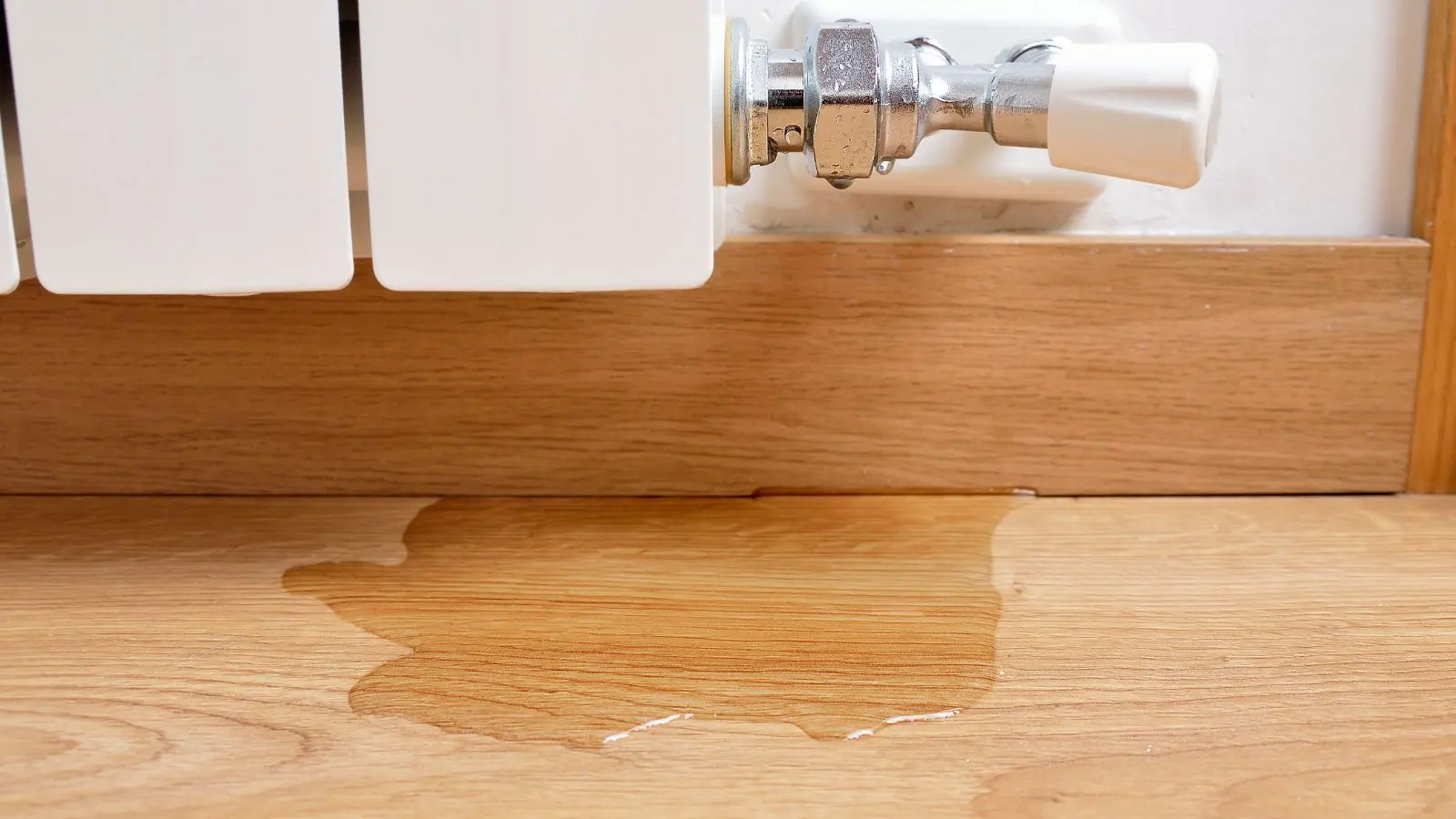
What water does to a hardwood floor
Wood is a natural sponge. It takes on moisture through its surfaces, edges and the underside of each board. As it swells, the boards push against each other, and the shape changes in predictable ways depending on where the water came from and how long it stayed.
Cupping means the edges rise higher than the center, and it usually follows moisture from below. Crowning is the opposite, with the center higher, and it often follows sanding a cupped floor before it dried. Buckling is the worst case, with boards lifting from the subfloor, and it usually follows large amounts of water.
In North Texas, the sources are often a failed water heater, a washer hose, a dishwasher leak, a slab leak or a roof leak. Laminate differs from solid wood, and engineered wood sits between them with a plywood core. Each reacts at a different pace, which is why the type of floor matters when planning the work.
What you see and what it means
| What you see | What it usually means | What to do |
|---|---|---|
| Edges of boards rising | Cupping from moisture below | Find the source and call (972) 945-2885 |
| Center of boards rising | Crowning, often after surface drying | Do not sand yet |
| Boards lifting off the subfloor | Buckling from heavy saturation | Stay off the area |
| Dark stains or black marks | Water sat on the surface or mold started | Photograph and call |
| Gaps between boards after drying | Shrinkage after swelling | Wait for a moisture reading before repair |
First-hour safety steps for a wet wood floor
Stop the source
Close the valve or fix the leak. Floors cannot dry while water is still coming.
Lift items off
Move furniture, rugs and boxes so air can reach the floor. Put foil or plastic under legs if you must leave furniture.
Avoid heat and sealing
Do not run high heat and do not seal or cover the floor. Both can lock moisture in.
Call early
Call (972) 945-2885. Wood floors dry best when drying starts in the first day or two.
How crews dry and assess wood floors
Crews check the floor with a moisture meter and compare it with a dry reading from a floor in a nearby room. They also check the subfloor and the air under the floor if there is a crawl space. Water that went under the boards is the real problem, because the surface can look fine.
Drying uses air movers and dehumidifiers, and sometimes floor drying mats that pull moisture from the boards. Some jobs need a few boards removed to let the underside breathe. Equipment runs and readings are logged daily until the wood and subfloor return to a normal range under the ANSI/IICRC S500 reference.
Once the floor is dry, it can be judged. Mild cupping often flattens on its own over weeks and can then be sanded and refinished. Heavy buckling, crowned or loose boards, and boards with mold usually need replacement. Related floors and materials are covered on carpet water damage cleanup and water damage repair.
Wood floor soaked or lifting?
Stop the source and lift items off the floor, then call. A dispatcher explains how floor drying works.
What changes the cost of hardwood floor work
- Floor type. Solid, engineered and parquet floors react differently
- Area wet. More square footage means more drying and more repair
- How long it was wet. Weeks of moisture cause permanent damage
- Finish. Sanding and refinishing is a separate step after drying
- Subfloor. Wet subfloor under the boards adds work
- Replacement. Matching old boards can be hard and adds time
Insurance and wood floors
The Texas Department of Insurance separates sudden and accidental water releases, a common covered risk, from continuous leaks, which are typically not covered. A hose that fails and soaks a floor is sudden. Cupping from a slow leak or humidity is treated differently, so dated photographs help.
Photograph the floor from several angles, keep samples of removed boards and make only temporary repairs until the insurer has seen the floor. If a gas water heater was involved, DeSoto Building Inspections at 972-230-9610 can tell you about the permit and the 18-inch rule for garage installations.
Mistakes to avoid with wet wood
- Sanding too soon. A floor sanded wet crowns after it dries
- Covering with a rug or plastic. Moisture is trapped
- Using heat guns. They crack the boards
- Refinishing over damp wood. The finish fails
- Ignoring the subfloor. The floor will fail again
Where we respond for wood floor losses
Crews cover DeSoto and reach Duncanville and Lancaster. If the water came from a tank, see water heater leak cleanup, and for the drying equipment used, see structural drying and dehumidification.
Is emergency hardwood floor water damage repair available in DeSoto?
Yes, when a floor is actively wet. Call (972) 945-2885 at any hour and a dispatcher arranges a crew based on availability.
Starting drying early gives the floor its best chance.
Can a cupped floor be saved?
Often, if it dries before the boards are damaged. Mild cupping can flatten over weeks.
Sanding comes after drying, not before.
How long does a wood floor take to dry?
It depends on the wood, the amount of water and the starting moisture. Many floors need several days.
Readings decide, not the calendar.
Does laminate dry the same way?
No. Laminate has a fiberboard core that swells and usually does not recover.
Solid and engineered wood react differently.
Will insurance pay for hardwood replacement?
Often, if the water came from a sudden event. Policies tend to treat a slow leak another way.
Read your policy and photograph the floor.